

Iron Warriors Sport Hub is a sports and social club for Ukrainian veterans, founded just over a year ago by Volodymyr Nechyporuk. It’s a place where sport becomes not only a tool for physical rehabilitation, but also a pathway back to active life — rebuilding social connections and overcoming the sense of psychological isolation many service members experience after injury.
It’s a community built on mutual support and inclusivity, and today it’s expanding beyond Kyiv into other cities.
In this interview, we speak with Volodymyr Nechyporuk — civic activist, executive producer of Ukrainian Fashion Week, and founder of the Iron Warriors Sport Hub.

Volodymyr says everything began with the multidisciplinary "Iron Eggs" festival in the summer of 2024. Its program included an open-water swim, archery, pétanque, amputee football, sitting volleyball, and a ruck march.
"In the beginning, we invited men and women who had been injured a long time ago — people who had already gone through all the circles of hell that rehabilitation entails and had started sports rehab. We wanted them to show the newcomers what life can look like afterward. Yes, it won't be the same as before the injury, but there's a chance to make it more emotional, more exciting, more social, more adrenaline-filled."
A striking example is Serhii Khrapko, captain of the Iron Warriors Hub's pétanque team. Despite a high amputation of his left leg and arm, Serhii does adaptive alpine skiing and wakeboarding, swims, jumps on a trampoline, practices archery, and even takes acrobatics classes. He's a unique person.
"The goal of our meetups is to get the guys out of the house. It's no secret that many veterans are isolated — their families have fallen apart or live far away... A person ends up alone with their injuries, their pain, thinking they have it worst. But when veterans talk to one another, things fall into perspective: one has a prosthetic arm, another has more complex amputations. The Iron Warriors Hub gives them a reason to put on their prosthesis, leave the house, join a sports activity, and be among their own."
"As civilians, we need to understand that we will never be 'their own.' That's a bond only veterans share. The best we can do is be reliable partners when they need us."
"If in May this year the official estimate was 1.4 million veterans, in reality the number is much higher — and it will multiply after the war ends. Society must ensure a broad range of services: social, medical, sports, cultural. We need a comprehensive movement toward inclusivity — from pharmacies and theaters to sports grounds and restrooms. This process needs to grow exponentially. There should be no barriers for people with disabilities."
After organizing several more festivals, Volodymyr and his team reached an agreement with Kyiv's Meridian sports complex to host weekly Hub meetings.
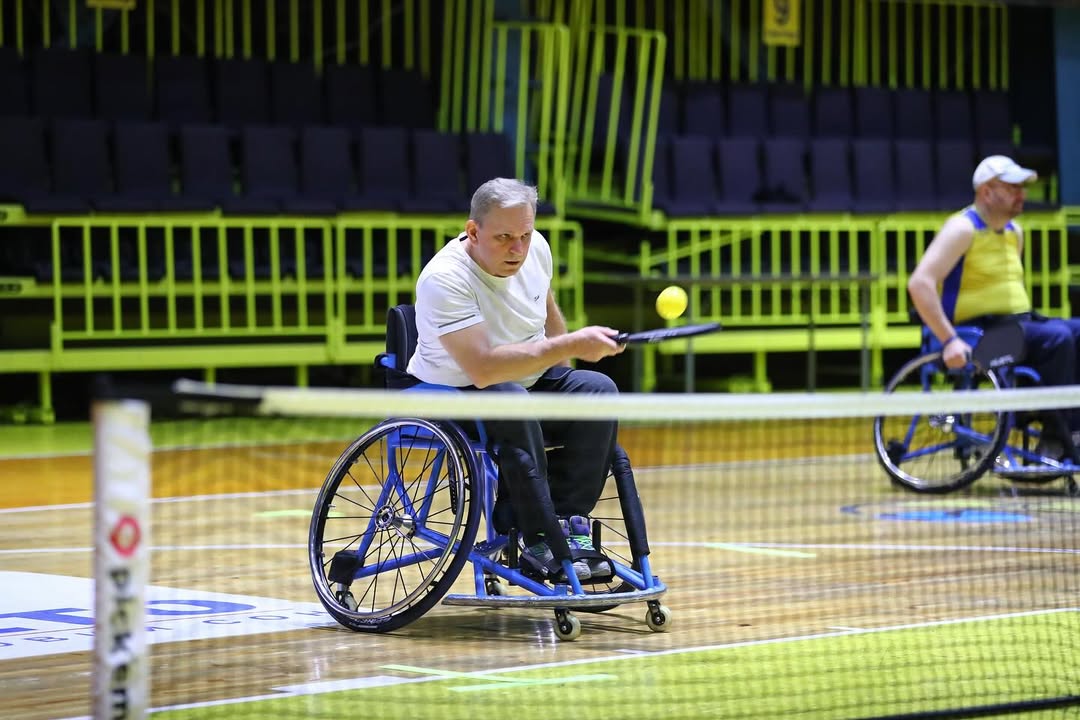
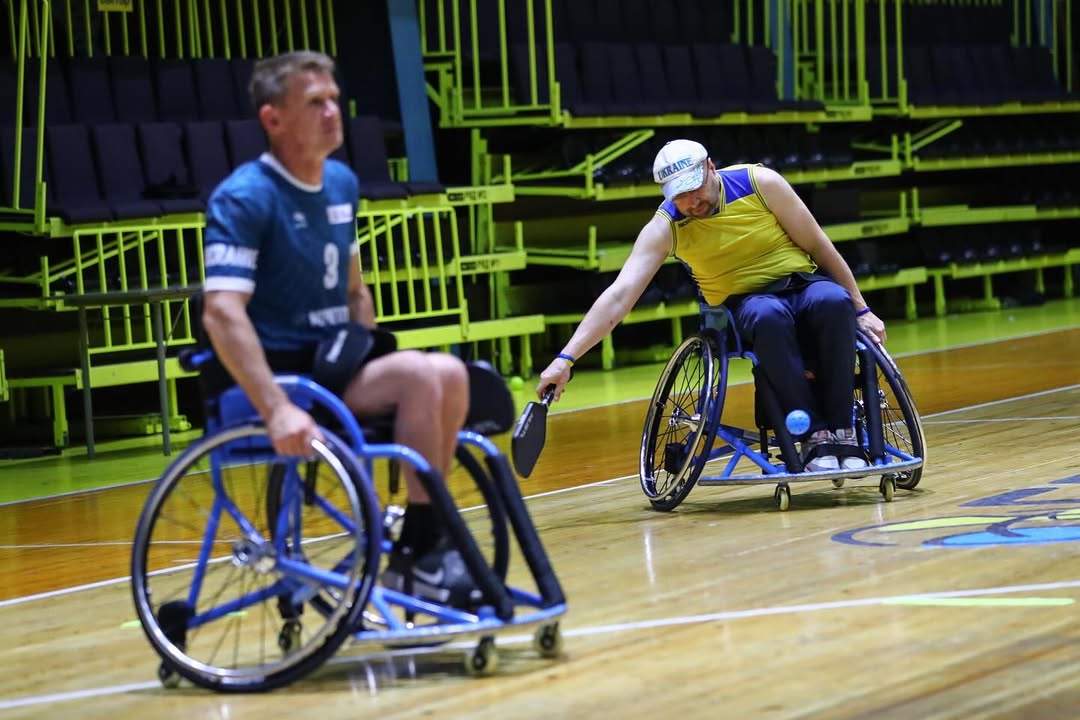
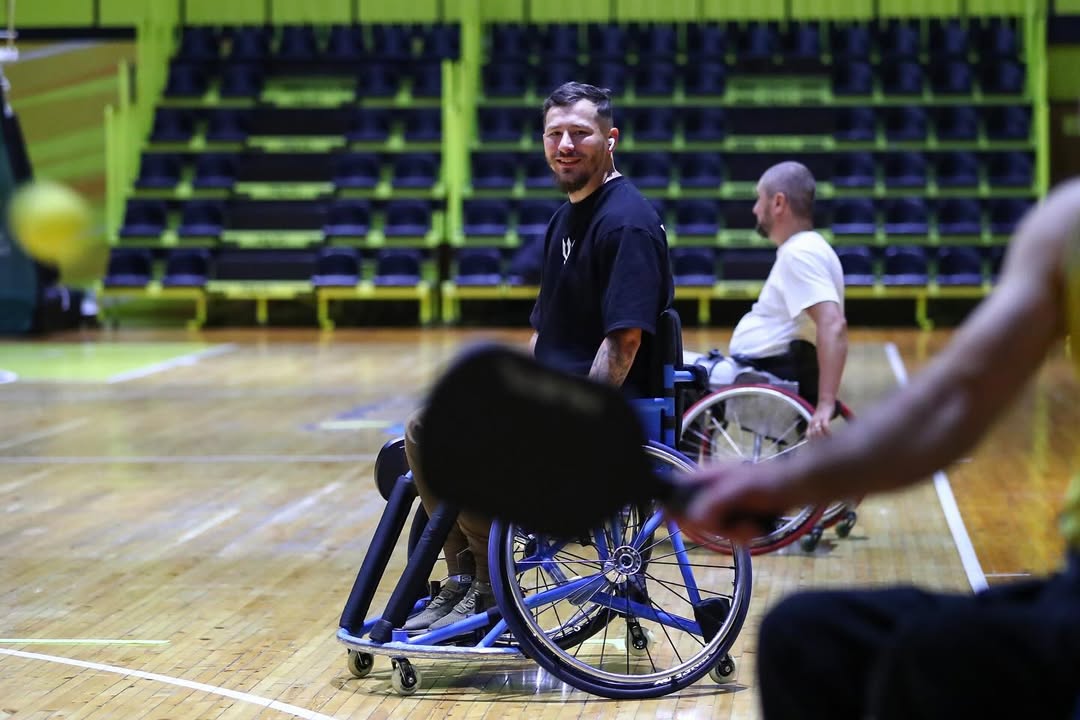
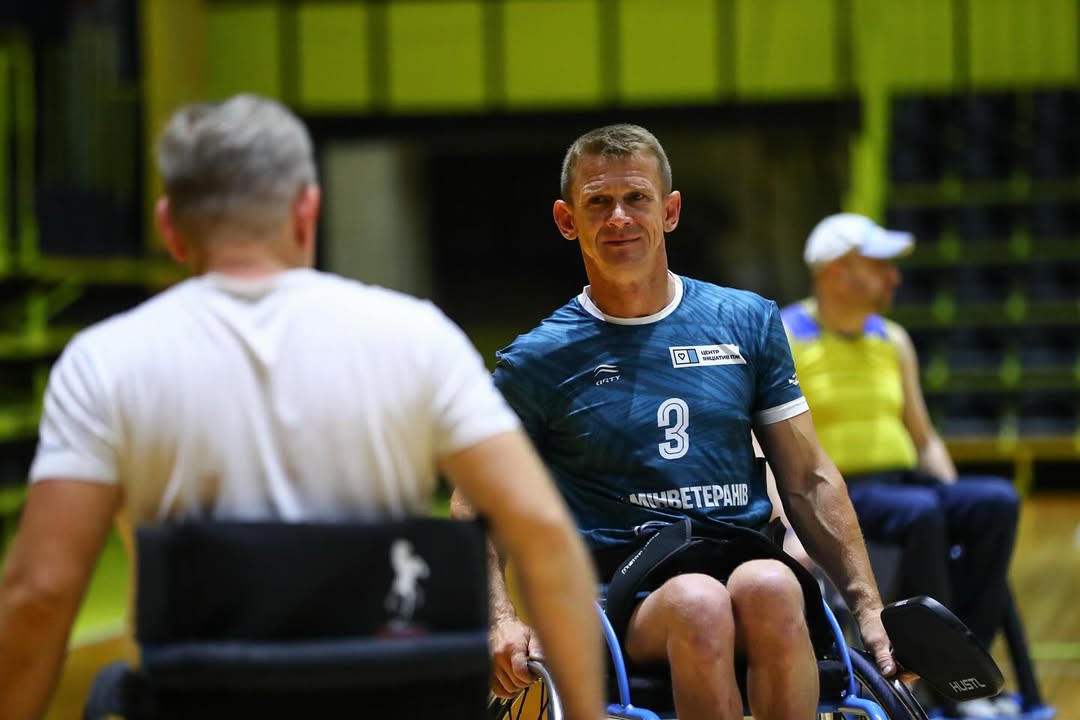
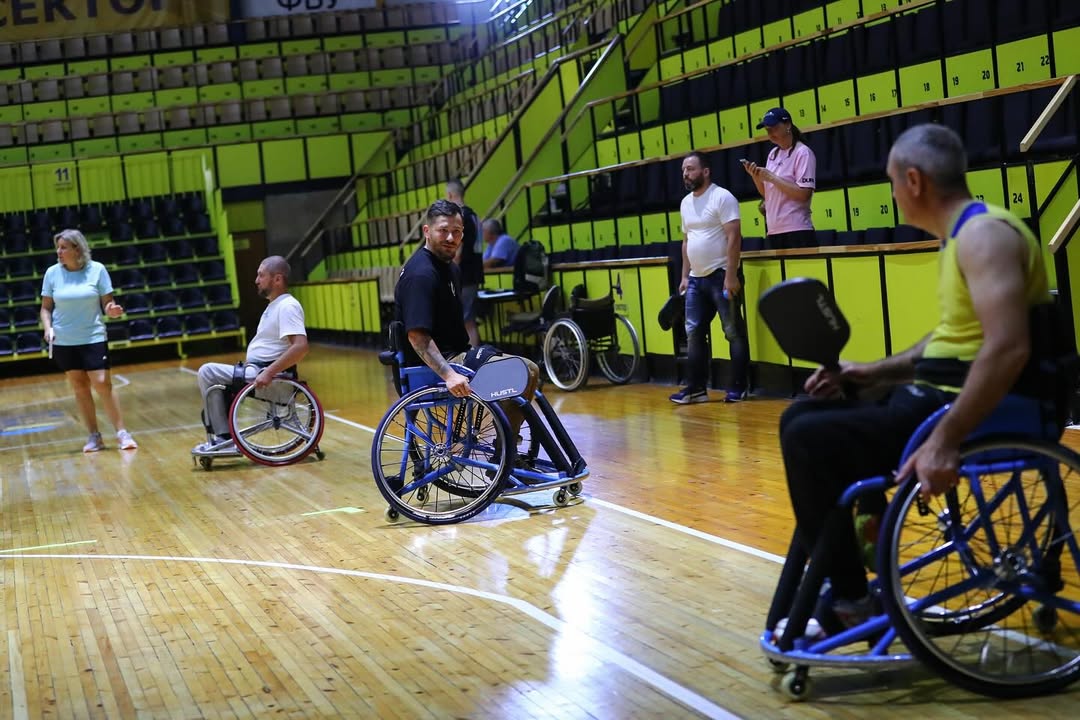
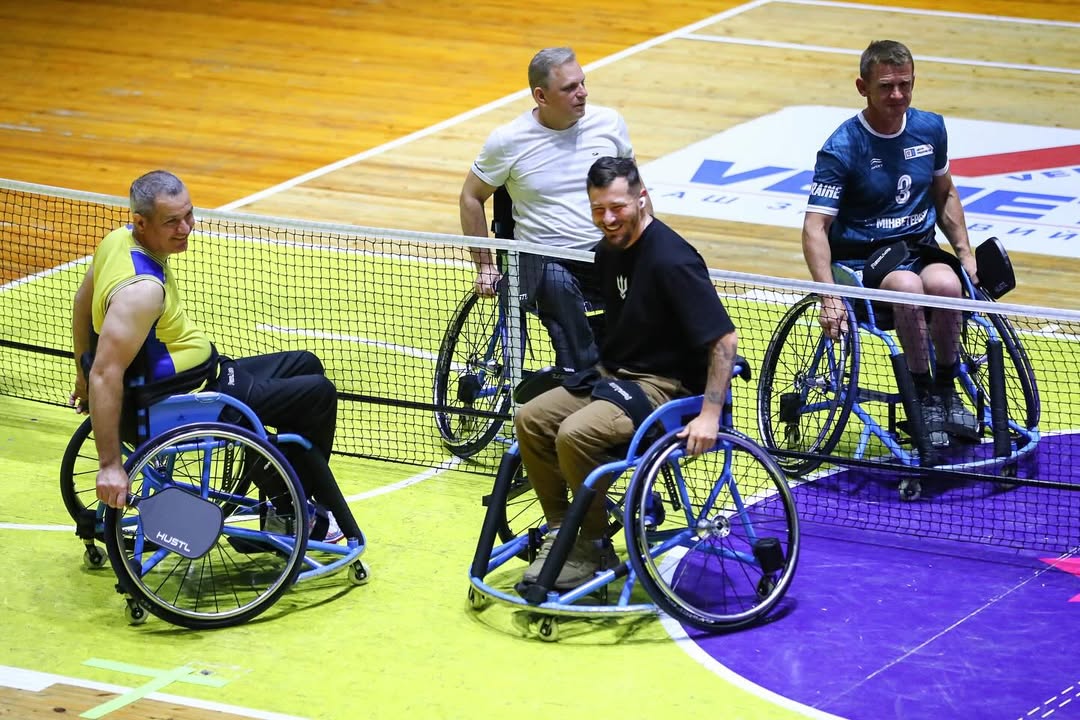
"At that point we worked with what we had: wheelchair basketball — my brother is a professional basketball coach, so he joined the team. Wheelchairs for basketball are expensive, around €3,000 each, but we have them, and together with the guys from Tytanovi and Kyiv Lions we run these sessions; pickleball; table tennis; and pétanque — the most adaptable sport that doesn't require special training or significant investment in equipment."
Eventually, new locations appeared in Hydropark, VDNG, and on the Pryberezhna embankment, making training accessible for veterans from different districts of Kyiv. The Hub also began building horizontal connections and partnerships in other cities — new branches opened in Odesa, Kovel, and Skalat. The volunteer center "Marlog," led by Natalka Popova, joined the partnership.
"We bought bags of pétanque balls and took them around different regions, giving them out. Some people liked the game more, some less — pétanque isn't a magic solution. Some veterans, for example, love swimming, but swimming is unfortunately one of the least accessible sports in Ukraine. Traditionally, in Soviet and post-Soviet times, most pools were built on the second floor, so getting there in a wheelchair or with a prosthesis is extremely difficult. If I'm not mistaken, there are only two adaptive pools currently functioning in Kyiv."
"Now we've introduced something a bit exotic — cornhole. With winter approaching and outdoor activities becoming harder to organize, we're focusing more on indoor games like backgammon, chess, and Mafia. But beyond sports, it's really about communication. In our club, we emphasize that this cannot become a 'reservation' for veterans — it has to reflect society at large. Kids come to us, orphans, widows. We talk and play together. We all have to learn how to live alongside veterans, understand their needs, and share the same cultural and informational space."
"Working with women veterans is more challenging: fewer of them come than men. For women who've undergone amputations, stepping into public spaces is often emotionally much harder. Our club includes Olha Benda — captain of Ukraine's women's amputee football team — and she's trying to involve others by example. For now, there are no women veterans on her team, only girls with civilian injuries. But many women veterans do participate in pétanque."
Volodymyr says that some stories of positive transformation unfold right before their eyes. Veterans grow stronger physically and emotionally. Attending Hub sessions is very different from going to a regular gym — there's a competitive charge, especially for younger veterans.

"I remember our first festival, when we invited Alla 'Chonhar' Sviatenko. She and her husband run a rehabilitation center, so we asked her to bring some of their guys to take part. Among them was a young veteran, Volodia, who — despite paralysis of his lower limbs — planned to swim 500 meters, and ended up swimming a whole kilometer. Some time after the festival, I visited the rehab center to say hello to him, but he wasn't there. 'He took a bus to visit his parents in Sumy,' they told me. 'Took a bus?' I asked in surprise. When he returned, he came back not in a wheelchair, but on crutches. They mailed his wheelchair separately."
"Volodia's story is just one of many showing the resilience and persistence of Ukrainian veterans. Another regular at the Hub, Artem 'Kobalt' Skrypnyk, took part in the Revolution of Dignity and fought in the ATO. With the start of the full-scale invasion, he joined the 128th Territorial Defense Battalion, first serving as the company's senior combat medic, and within a year becoming a senior rifleman. During a combat mission, Artem was severely wounded, resulting in a high amputation of his left leg.
I was badly injured in Donetsk Oblast near Bakhmut. It happened during the period when Wagner forces were trying to encircle the city. My partner and I held the last machine-gun position. The shell landed right in our trench. My partner died instantly, and I regained consciousness only in the hospital.
Now Artem trains actively — he paddles on a dragon boat team, and together they took second place at a national competition. He also heads his own NGO, Veterans of the 128th Territorial Defense Battalion of Kyiv's Dnipro District.
Recently, Artem Skrypnyk climbed Ukraine's highest mountain — Hoverla.
"The first steps were difficult, mostly because of the snow. But I kept moving forward — I told myself I'd reach the top," he told UkraineWorld.
The article is produced by UkraineWorld with the support of the Askold and Dir Fund as a part of the Strong Civil Society of Ukraine - a Driver towards Reforms and Democracy project, implemented by ISAR Ednannia, funded by Norway and Sweden. The contents of this publication are the sole responsibility of UkraineWorld and can in no way be taken to reflect the views the Government of Norway, the Government of Sweden and ISAR Ednannia.


