

This is the story of Kateryna Prosvietova, a Ukrainian illustrator from Mykolaiv who was forced to move to the western part of Ukraine after the full-scale invasion, where she founded the "Persha Volonterska Snekarnia" ("First Volunteer Snack Workshop") — an initiative that provides Ukrainian soldiers with much-needed field rations.
Katia's illustrations carve out space for humor, warmth, and something softer within the weight of wartime reality. In this interview, we speak with her about the early months of the full-scale invasion, her creative work, and running the snack workshop.
"I'm an illustrator from Mykolaiv — a free-spirited child of the untamed south whom the war carried off into the mountains. My husband and I left our hometown in the very first days of the full-scale invasion, because our house stood near a military airfield. At first, we stayed at my parents' place in the Lviv Oblast, then moved to Ternopil, and in 2023 relocated to the village of Mykytyntsi, in the Kosiv district. That's where Snekarnia was born.
Before the full-scale war, we were living our best lives. I had a small studio at home where I painted watercolors, and a garden where I could rest my soul. I had several well-paid copywriting projects, while my husband worked in IT and played in four bands that performed regularly. We had loads of friends, were constantly traveling in our van, spent nearly every weekend outdoors with tents, went to the sea, and devoted all our free time to our place on the Kinburn Spit.
The war took all of that from us. In a single day. Just like that — and suddenly we were in our van with our cats and all our camping gear, rattling across the fields of the Kherson Oblast, with fighter jets overhead and explosions going off all around us.
In the first months, we focused on helping friends who hadn't left in those initial days to get out. In the end, we gathered 13 people, five cats, and two dogs under my parents' roof. At the same time, we helped others locally however we could: driving around to find diapers and baby formula for internally displaced people, buying medicine for the local hospital, and picking up whatever food we could afford with our savings.
In 2022, I planted the biggest garden of my life — because I had no idea how else to feed 13 people in one house. But by summer, it became clear that this was going to last, and that all of us needed to adapt and try to keep living. So we left the village for Ternopil, giving the house over to my husband's relatives, who we had finally managed to evacuate from Mykolaiv after a strike near their home.
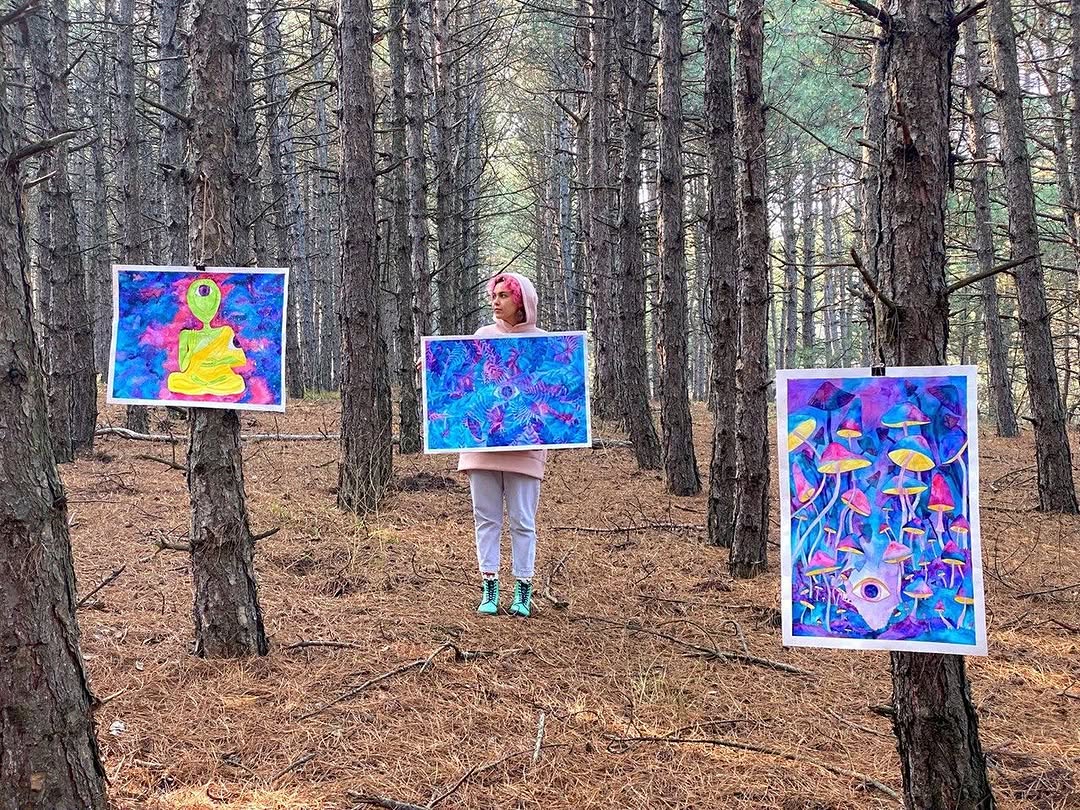
Those first chaotic six months, I had neither the time nor the space for watercolor, and it affected me deeply. So in March, I started figuring out digital illustration. First, because it was the only way I could keep drawing — and second, because that sudden loss of ground beneath my feet made me realize just how short life is. Ten years in copywriting felt like enough, and it was time to devote myself to what I had truly loved all along."
"The war does influence my work, but not in an obvious way. Early on, I realized I didn't want to replicate the war in my art. Of course, after witnessing the horrors of that first year, there were moments when I felt the urge to process those brutal images through creativity — but I really didn't want to transmit the war itself. So I started drawing things that were funny and kind.
One of my first digital series was about a little frog learning how to take care of itself while everything around it is spiraling toward inevitable collapse. The illustrations were pretty rough — transitioning from watercolor to digital wasn't easy — but I liked that they reminded people of basic self-care, something all of us were lacking at the time.
Now, of course, you can spot hints of the war in some of my work, but only as a kind of background. It would feel strange to ignore things like missiles or drones, which have become an inseparable part of our reality.
Still, I don't allow any drama into my images. There's already more than enough of that in the world without me — so I draw things that are funny, gentle, or joyful. You can never have too much of that."
"The snack workshop came about largely through a dramatic chain of circumstances. At the time, we were living in the woods in Mykytyntsi with friends, our cats, and our dog. A friend in Kyiv was constantly raising funds for the military, and I would help from time to time. One day she posted asking anyone in the food industry to help dehydrate meat for soldiers — it was brutally hot, and they needed something nutritious that wouldn't spoil. I told her that if no one else stepped up, I could make a small batch. I'd been good at making jerky since my hiking days, when you need something light but filling.
That same summer, our dog, Jazz, got sick. It took a while to understand what was wrong — we took him from one clinic to another, and eventually learned he had cancer. Of course, we weren't ready to give up. I'd been setting money aside from the moment he fell ill, found an oncologist, and we were waiting for my mother-in-law to arrive so we could take him to Lviv. But that evening, as she arrived, he died in our arms — as if he had been waiting to say goodbye to everyone.
It hit us all hard. My husband had grown up with him; I'd fallen in love with that dog long before I fell for my husband. My mother adored him, our friends adored him. He was a beautiful Labrador — gentle, social, just perfect.
The next morning, that same friend messaged me to say no one had responded. I felt so hollow, and honestly scared of falling apart — I had just come off antidepressants a week earlier — that I agreed immediately. I knew that if I didn't want grief to consume me, I needed to throw myself into something overwhelming and useful for the military. That very morning, I spent the money I had saved for the dog on a dehydrator, a vacuum sealer, and a slicer. That's how the snack workshop began.
The first six months were intense. Rural logistics were difficult, I was developing the process and marinades from scratch, testing recipes, gathering feedback from soldiers. At first, my friend fundraised for the raw materials — I'm endlessly grateful for that, because I wouldn't have managed it alone back then.
The first batches were a huge success, with great feedback — so it became clear I was in this for the long haul.
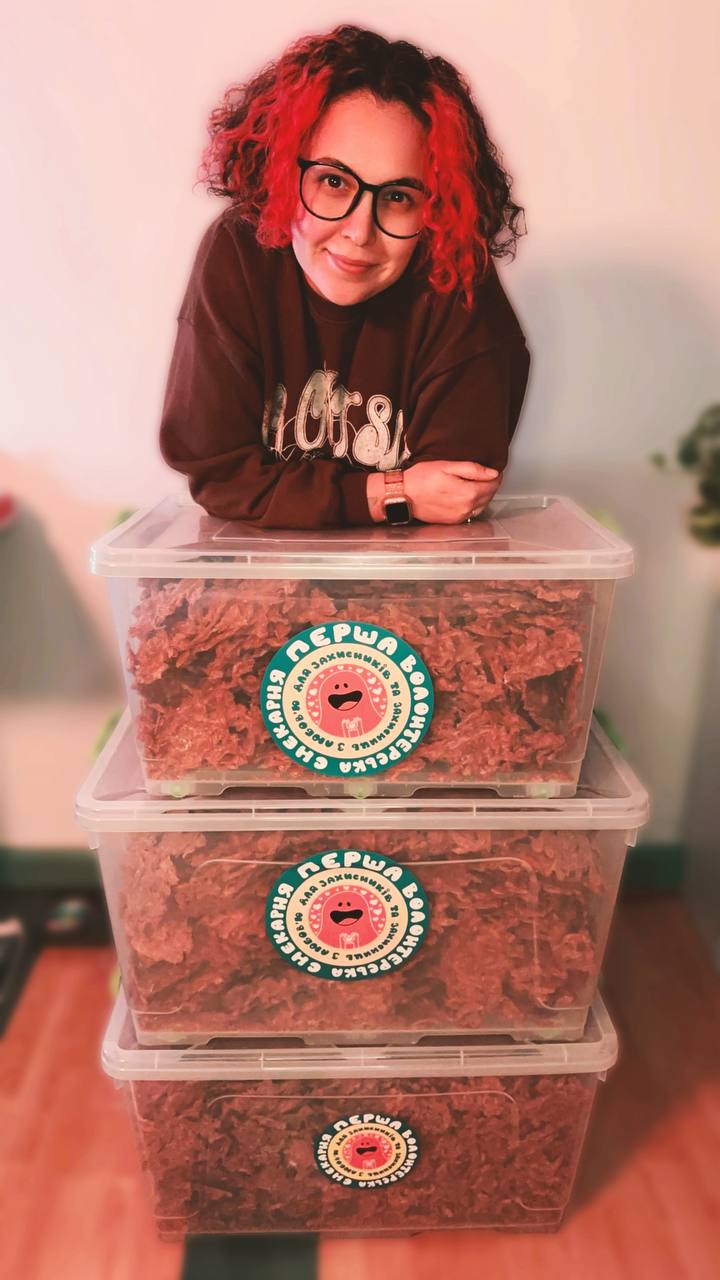
Within a few months, it was obvious that to scale up production (back then it was just 30-50 kg of chicken per month), we had to move back to a town. That's how we ended up in Kolomyia.
There, I quickly expanded the equipment (thanks to everyone who donated), found a wholesale supplier, and scaled up to 300-400 kg per month. I handled fundraising myself, and with the help of a butcher from Vinnytsia — who provided professional spice blends and still supports us — things really took off. I was working 18--20 hours a day, about 20 days a month. There were constant requests, and I was mostly on my own, but that feeling — that if not me, then no one — kept me going through the physical strain.
As more soldiers learned about the project, requests kept growing, and I did everything I could to meet them. Alongside that, I developed a simple, friendly brand, improved the packaging so it could withstand drone drops, kept searching for better suppliers — and kept fundraising.
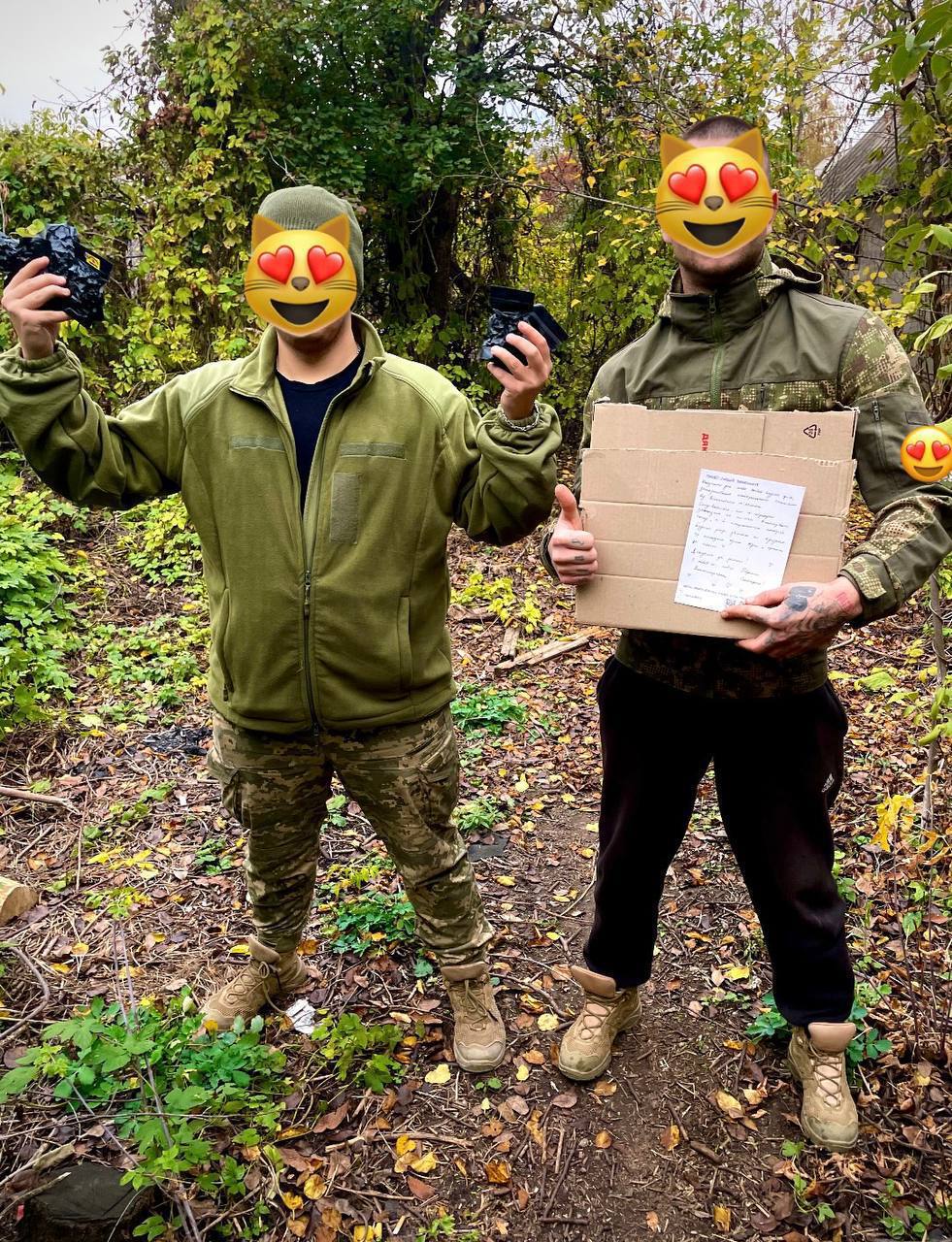
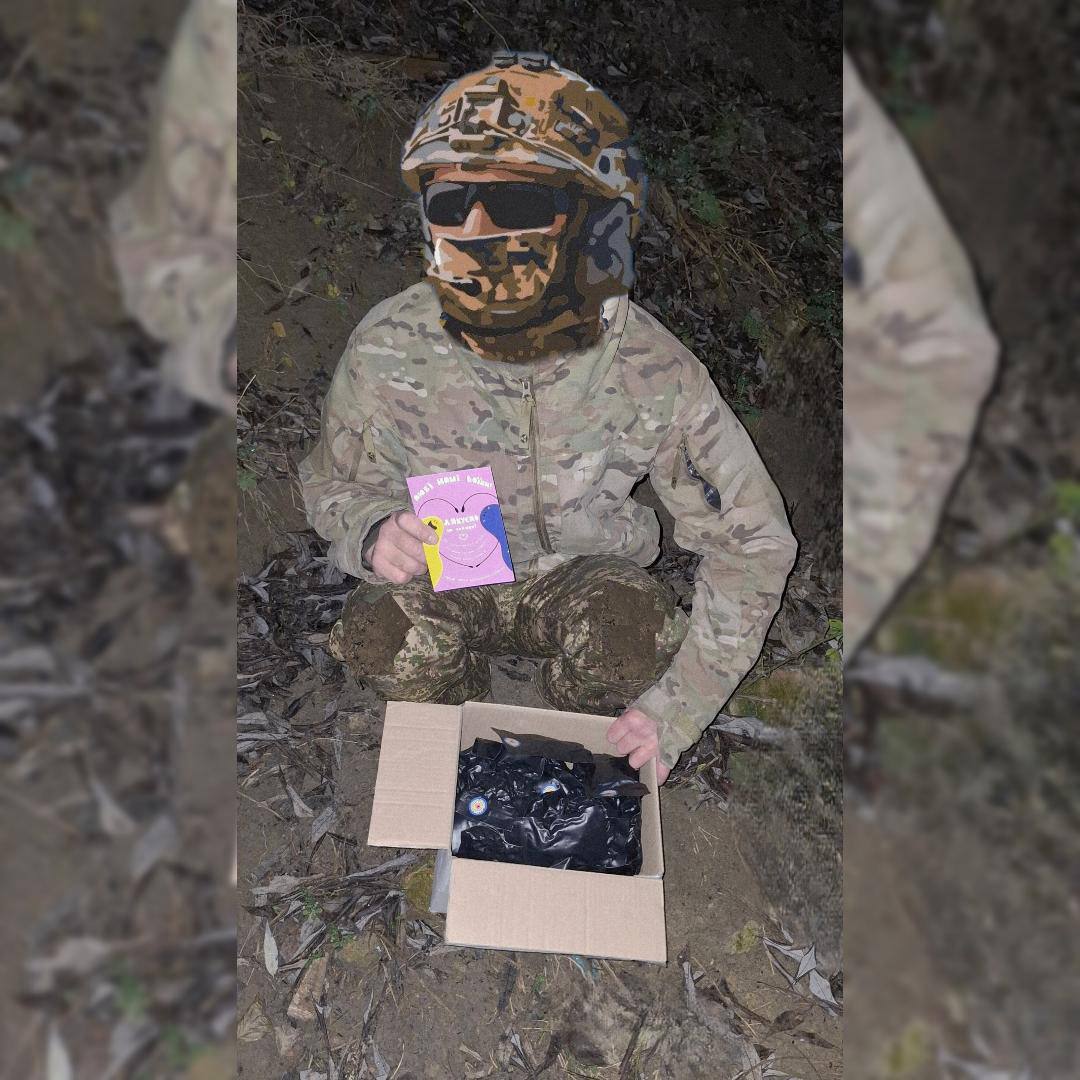

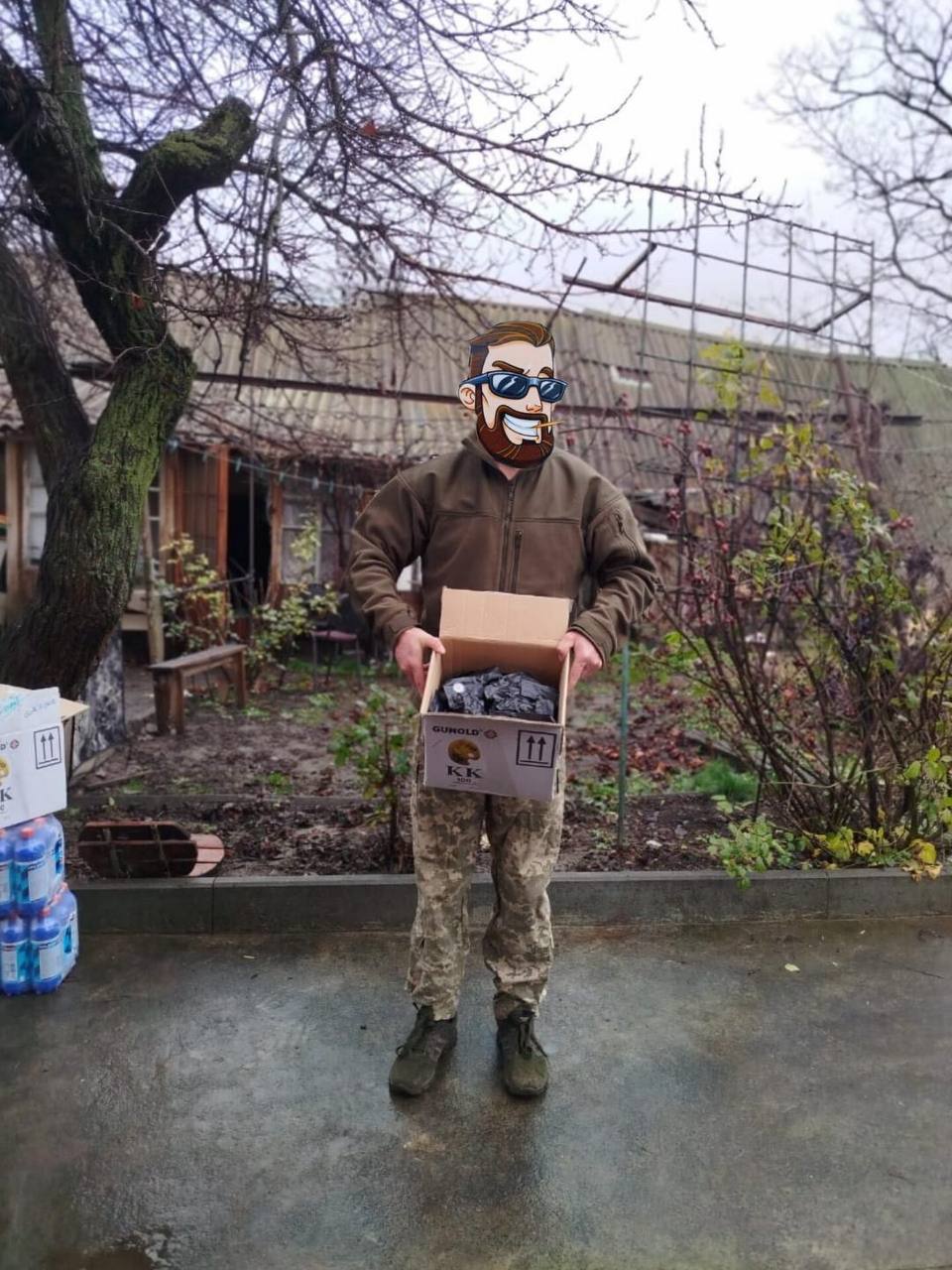
Now fundraising has become much harder — everyone feels it. So for now, production is down to about 150-180 kg per month. I can't cover raw materials myself, as all our family resources go into electricity bills, antiseptics, gloves, packaging, and logistics.
Over these three years, I've probably been on the verge of shutting down the production at least ten times. It's hard — expensive, physically exhausting, emotionally draining. It takes all my strength and nearly all my time. And yet, it doesn't feel like something I'll ever be able to stop for good. Because every time I think I'm done, it lasts exactly until the next request comes in. The soldiers write that they need it — and I say, "We'll make it." And we do. With the effort of five incredible people and the donations of hundreds who care.
Maybe this is the only way a volunteer production like this can function effectively in a reality like ours."
Alongside the snack workshop Katia regularly runs fundraisers for military needs: vehicles, optics, EW and signals intelligence gear, generators — the usual list.
"What really helps is a small line of frog-themed merch I created — people can get it in exchange for a donation to the workshop. It's not huge money, but it often keeps us afloat. In March, we even held a full-on frog-themed exhibition in Ivano-Frankivsk — it was a lot of fun, the merch sold well, and we almost closed the next production batch. Besides exhibitions and Instagram, our frog postcards, stickers, and tote bags are also available at a few spots: at Kytsia Korytsia café in Rivne, at Bukinist bookstore in Kolomyia, and at Lite Coffee in Ivano-Frankivsk.
I'm incredibly grateful to the owners — it's real support — and we're always looking for more places willing to stock our merch.
In general, I'm constantly thinking about where else to "plant" these frogs and what new things I can create — anything to avoid simply asking people for money as raw materials keep getting more expensive.
Right now, I'm also working on vitamin tea blends for the military. Last year, I gathered sea buckthorn in the forest, so we're making sea buckthorn teas — the guys are constantly getting sick, and at least this way they'll get some vitamins and a bit of homemade warmth. I really hope it turns out the way I imagine it. If it does, we'll stock up on more fruits and berries over the summer and launch the teas on a larger scale next season.
More than anything, I want the need for tactical snacks for the military to disappear as soon as possible. I want them all to come back — and for me to finally immerse myself in building my career as an illustrator (I've dreamed of illustrating children's books since I was a kid), and in creating a large psychological rehabilitation center in the mountains.
Something like a hectare of land in the middle of nowhere, with cozy little houses, workshops, psychologists on staff, and specialists who can help with grant applications and business planning. A place where soldiers could come to rest their wounded minds, receive support, and leave with a clear plan for life, creativity, or starting a business."
Because once the fighting ends, our next task will be helping veterans reintegrate into civilian life — and I would really love to be part of that.


