

At -15 degrees Celsius, apartment blocks across Ukrainian cities fell silent and dark. Radiators went cold, water froze somewhere in the pipes and entire neighbourhoods were left without heat, light or running water. Thousands of buildings were affected, so municipal services work around the clock under extreme conditions to restore systems repeatedly damaged by strikes. Residents try to layer winter clothing indoors to endure the cold in their own homes.
This is not the result of a natural disaster.
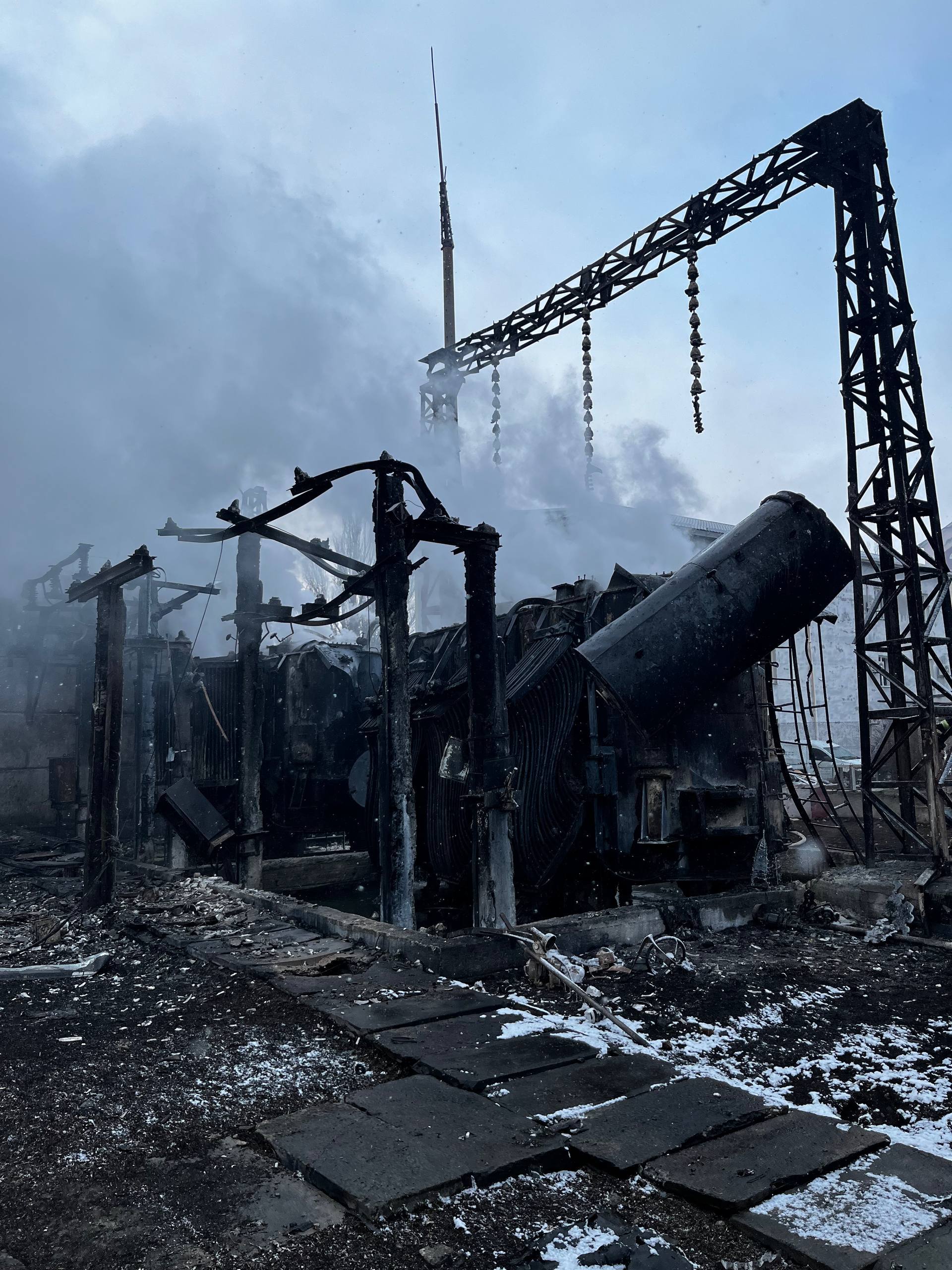
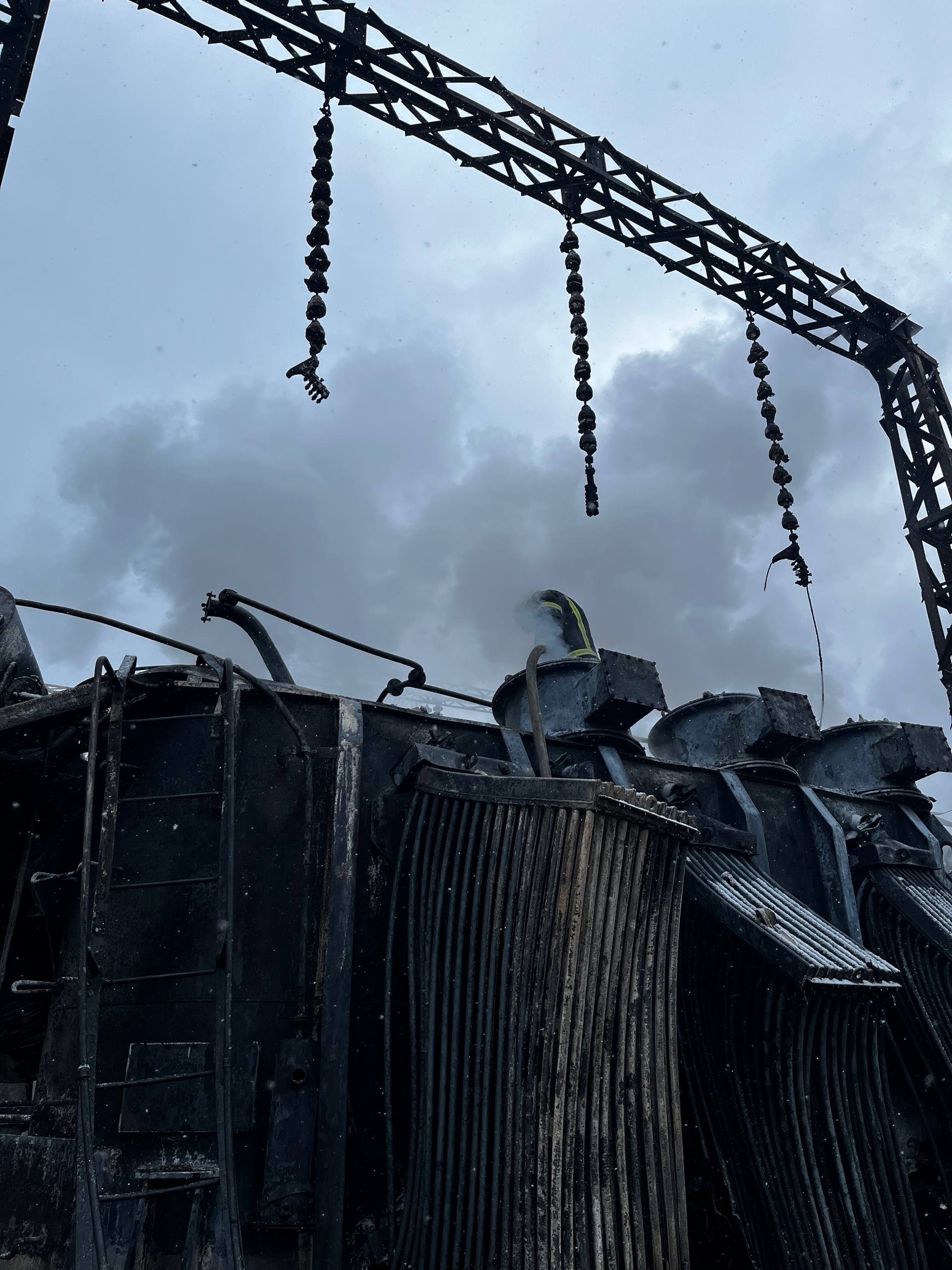
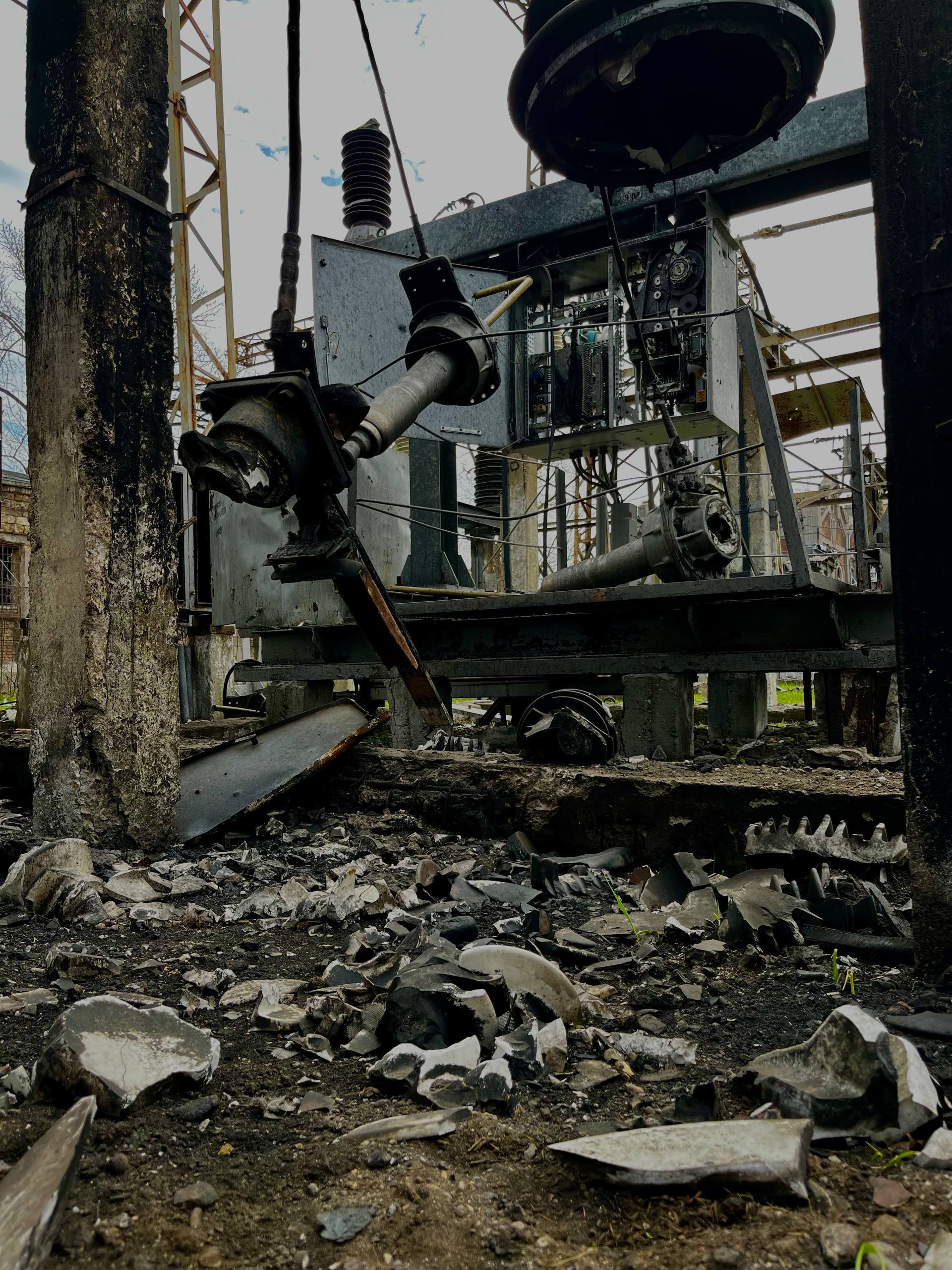
It is the outcome of targeted Russian strikes on Ukraine's civilian and critical infrastructure in January 2026, with the main targets being energy systems, ports, logistics and homes.
These attacks were not accidental, they are part of a deliberate strategy to disrupt electricity, heating and essential services in the middle of winter, causing civilian casualties and widespread humanitarian consequences.
According to Ukraine's largest private energy company, DTEK, not a single day passed without strikes targeting energy facilities. The list below doesn't cover all the attacks, but only the most devastating ones.
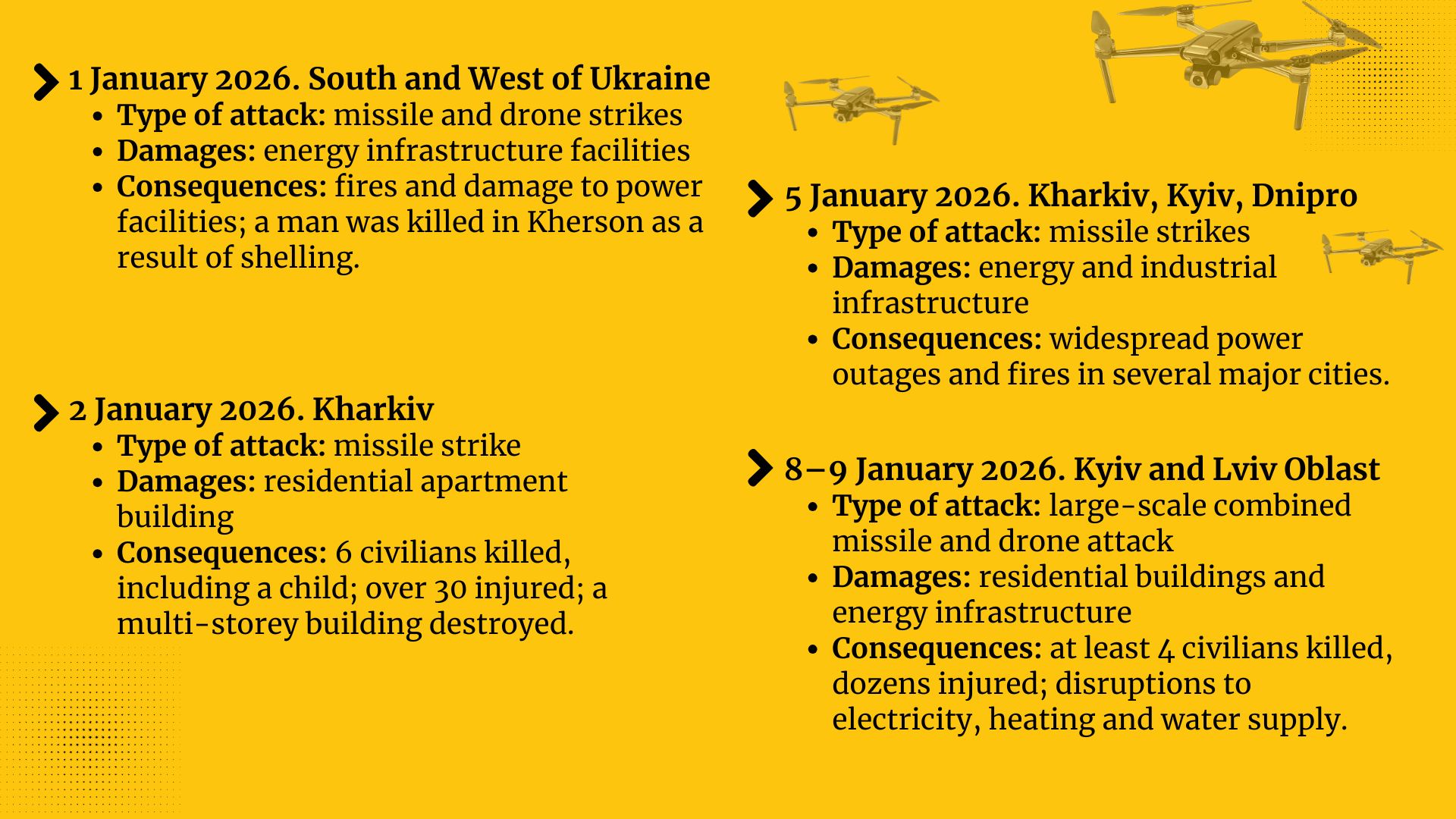
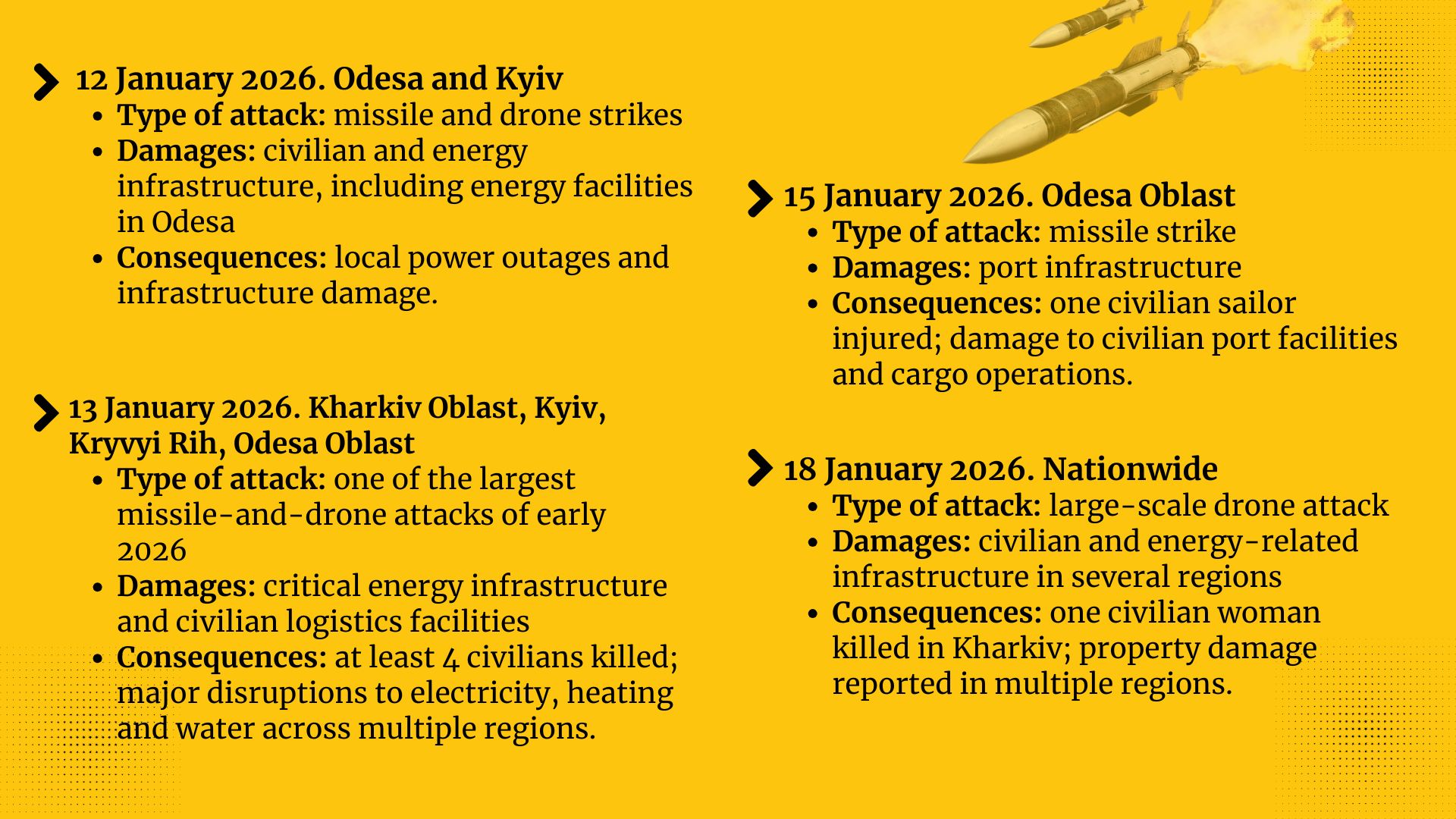
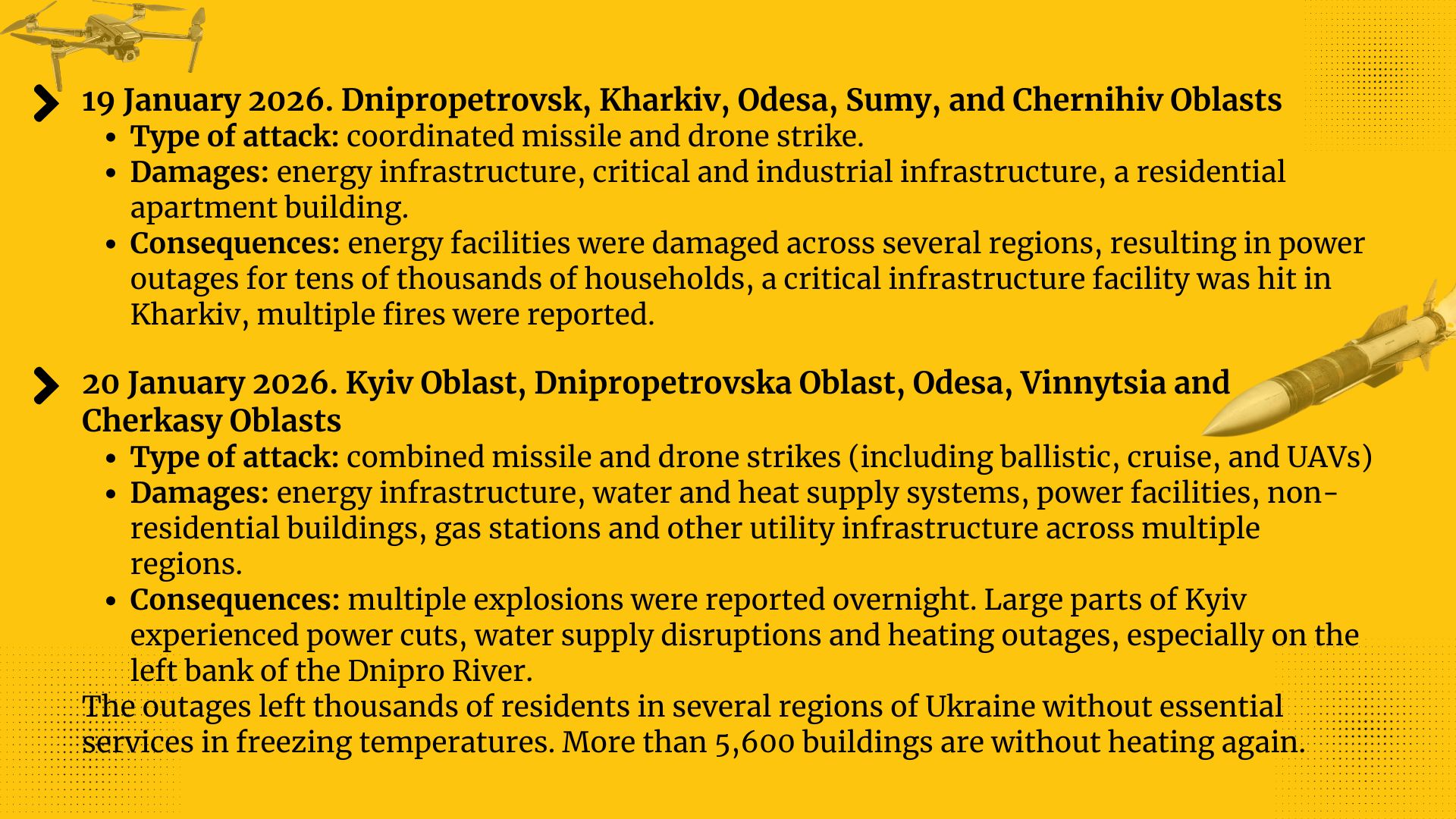
Energy infrastructure was repeatedly hit, resulting in widespread disruptions to electricity, heating and water supply during freezing winter conditions.
Large numbers of residents were left in their homes without heating, water or electricity during freezing winter conditions. Municipal and emergency services worked under extreme strain, carrying out repairs amid ongoing air raid alerts and repeated infrastructure damage. Partial stabilisation took days rather than hours, with nearly a week required in some regions to restore basic services, only for the January 20 strikes to reverse these gains again.
1. Weaponising winter and civilian dependency The aim is to transform everyday civilian needs, such as warmth, light and water, into instruments of coercion and control, forcing society to absorb the costs of war far from the front lines.
2. Compensating for limited success on the front Attacks on cities and infrastructure enable Moscow to claim dominance and victory, demonstrating progress and control to the Russian public. This is a strategy: if territory cannot be seized, civilian life can still be disrupted.
3. Systematically fragmenting Ukraine’s energy system. Russia is attempting to break Ukraine’s integrated energy grid into isolated “energy islands”. In practical terms, this would mean regions unable to compensate for damage through internal electricity redistribution, making even limited strikes more damaging.
The Institute for the Study of War states that Russian attacks are designed to split Ukraine’s energy system along an east–west axis, thereby limiting key transmission corridors connecting generation capacity with consumption hubs. If it succeeded, it could undermine one of Ukraine’s main defensive advantages: the ability to reroute power across regions when parts of the system are damaged.
This approach could transform Ukraine’s energy infrastructure from a resilient, interconnected system into a patchwork of isolated zones — each more vulnerable to renewed attacks and more costly to stabilise.
4. Exhausting air defence and emergency systems Coordinated missile and drone strikes across Ukraine aim to stretch air defence and emergency systems.
5. Sending signals far beyond Ukraine. The use of the “Oreshnik” missile serves primarily as a demonstrative show of force. Russia also tests Western tolerance for prolonged instability, humanitarian pressure and infrastructure damage, probing whether support for Ukraine still remains.
Russia’s January 2026 attacks make one thing clear:a strategy of exhaustion is not a strategy of victory.
By attacking energy systems day after day, Moscow is not seeking a decisive breakthrough, but the slow normalisation of disruption – turning blackouts, cold and uncertainty into a permanent and normal condition of life. So far, the evidence in Ukraine suggests that endurance, not exhaustion, remains the defining variable.
There is another audience for these strikes: by sustaining pressure on civilian systems, Moscow is probing the limits of international tolerance for prolonged instability and humanitarian strain.
This publication was compiled with the support of the International Renaissance Foundation. It's content is the exclusive responsibility of the authors and does not necessarily reflect the views of the International Renaissance Foundation.


